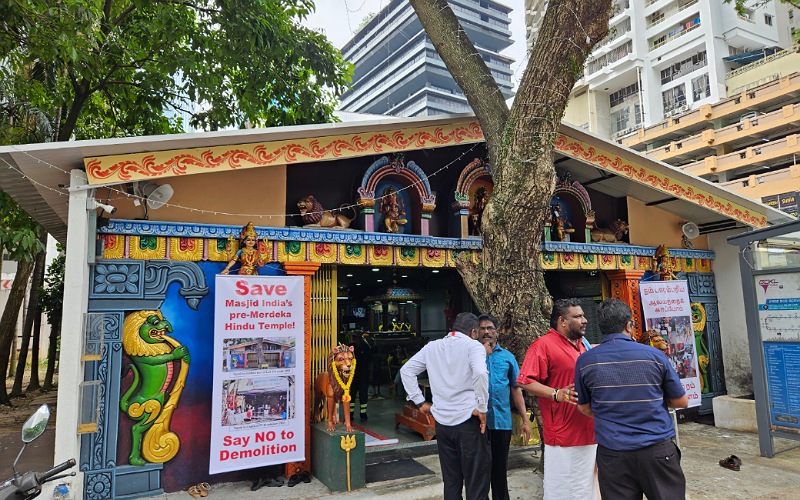
The recent wave of temple controversies is not an organic movement for legal reform. It is a calculated political campaign aimed at undermining the government of Anwar Ibrahim and weakening the multiracial support sustaining Pakatan Harapan (PH)
Post-15th General Election analyses show overwhelming non-Malay backing for PH, particularly among Chinese and Indian voters, an unprecedented consolidation of support in Malaysia’s modern political history. That mandate is structural, not fragile, and it is precisely why it has become a target.
On conventional battlegrounds, the government is performing strongly. The economy expanded by over five percent last year, exceeding expectations. The Employees Provident Fund (EPF) declared a 6.15 percent dividend with nearly RM80 billion in payouts, reflecting institutional strength. The ringgit recently touched 3.89 against the US dollar, its strongest level since 2018. These figures reinforce public confidence in the government’s leadership.
When economic criticism fails, politics shifts to emotion. In Malaysia, nothing is more combustible than race and religion, and today, places of worship.
The Prime Minister has made it clear that illegal structures, including houses of worship, must be addressed lawfully by the relevant authorities. Enforcement belongs to institutions, not self-appointed actors. Yet some individuals are bypassing due process, acting first, and weaponising the aftermath.
The pattern is unmistakable. Outrage is amplified in PH-governed states such as Selangor and Penang, while comparable issues in states under Perikatan Nasional, including Kedah and Perlis, draw far less attention. The cumulative effect is political, cultivating doubt where support is strongest.
The agenda is now clear. Messaging encourages voters to reconsider or shift their constituencies in PH-controlled states with an aim to fracture support from within, and engineer electoral setbacks. This is no longer about temples. It is about territory. Repeated controversy is intended to weaken loyalty, create internal doubt, and influence electoral outcomes.
The playbook is predictable. Highlight a temple, label it illegal, amplify outrage, portray the government as slow, and if authorities act, claim suppression. This is not activism or civic reform. It is a perception campaign with electoral intent, designed to erode trust and destabilise the multiracial mandate that defines the government.
The government remains consistent: illegal structures, regardless of religion, will be addressed lawfully by the proper authorities. No faith is above the law. No individual is above it either. Malaysia’s stability depends on respecting institutions, not undermining them for political mileage. These controversies are not about covic reforms, they are political agenda.
Ini la agenda mereka yg sebenar. Nak tumbang kerajaan yg berkerja