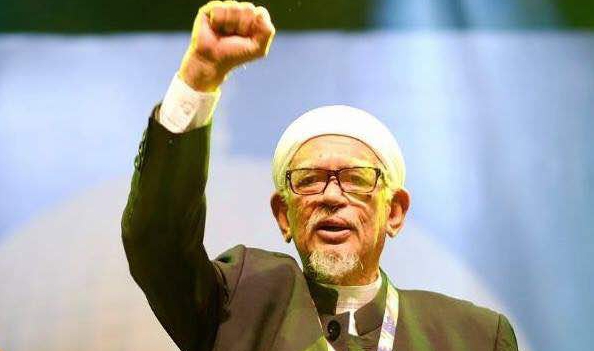
The growing talk of Abdul Hadi Awang taking the helm of Perikatan Nasional is no longer just speculation. It is a signal of where the coalition is heading, and it is not a direction that suggests recovery or renewal. It points instead to consolidation of power around one man and one worldview, at the cost of PN’s already fragile cohesion.
PAS under Hadi has not merely shifted tone. It has hardened. What was once an Islamist party that still allowed internal plurality has been transformed into an exclusivist movement defined by rigid ideology, suspicion of difference and hostility toward dissent. This is not an accident of circumstance. It is the product of Hadi’s leadership style and political instincts.
Whether or not Hadi formally becomes PN chairman, the trend is unmistakable. His influence is expanding as Muhyiddin Yassin is pushed aside and senior PN figures exit en masse. The resignations of PN’s secretary-general and multiple state chiefs on the same day as Muhyiddin’s announcement were not routine transitions. They were a vote of no confidence in the coalition’s future. In that vacuum, PAS is moving to assert dominance, and Hadi is the axis around which that dominance revolves.
History offers little comfort. Hadi’s tenure as menteri besar of Terengganu from 1999 to 2004 remains one of the clearest examples of his limitations as an administrator. His government struggled with weak governance, incoherent policy and an inability to convert moral rhetoric into competent rule. The electorate’s response in 2004 was decisive, wiping PAS out of the state. That defeat was not imposed by enemies. It was earned through failure.
Instead of recalibrating, Hadi doubled down. He reshaped PAS into a party less interested in governing a plural society than in policing belief and loyalty. His sermons and writings consistently frame politics as a zero-sum struggle between believers and enemies, reducing democratic disagreement into religious antagonism. That worldview leaves no space for compromise, coalition management or constitutional restraint.
His editorials, particularly on Harakah Daily, have reinforced this trajectory. The repeated use of religiously charged labels was not careless language. It reflected a deliberate narrative that casts non-Muslims and dissenters as moral threats. This approach does not unite supporters. It alienates allies and shrinks the political space a coalition needs to survive.
The contrast with PAS’s earlier leaders is stark. Figures like Nik Abdul Aziz Nik Mat and Fadzil Noor held firm ideological beliefs but understood humility, restraint and engagement. They did not equate political disagreement with religious enmity. Under Hadi, that tradition has been dismantled. Moderates and progressives were expelled or marginalised, not for corruption or betrayal, but for believing in inclusive governance and democratic politics. The formation of Parti Amanah was not an accident. It was the result of PAS becoming intolerant of internal diversity.
This matters for PN. A party that cannot tolerate debate within itself cannot function as the anchor of a multi-party coalition. Leadership at coalition level requires the ability to manage differences, distribute power and contain conflict. Hadi’s PAS does the opposite. It centralises authority, rewards ideological loyalty over competence and escalates disputes rather than resolving them.
If Hadi Awang becomes the face of PN, the consequences are predictable. The coalition will narrow, not expand. Non-PAS components will become increasingly irrelevant or uncomfortable. Centrist and fence-sitting voters will close ranks against a bloc perceived as rigid and exclusionary. What remains will be a smaller, louder and more isolated opposition.
This is not about faith. It is about function. Power without restraint, ideology without governance and dominance without coalition-building are not strengths. They are liabilities.
PN is already weakened by internal exits and leadership vacuum. Placing Hadi Awang at its centre does not stabilise the coalition. It accelerates its decline. In trying to tighten his grip, Hadi may well confirm what many voters already suspect: that PN under his influence is not a government-in-waiting, but a coalition retreating into its own echo chamber.
Hadi has been mad for power all along.
Will his dreams come true?
Guess the plan is to turn Boleh land into another Taliban.
Which brand of Islam? If it’s the way that Malaysian adherents somehow condones corruption and social injustice in Malaysia, forget it.
If it’s Progressive Islam and implemented in a way that respects non-Muslim as equals and stamps out corruption in our country, I don’t mind. But I know that’s wishful thinking…
We know la! Look at Afghanistan, Pakistan, Iran. What do you think is coming?
Politics is a game and to survive and be relevant you have to play it well. It’s not a dirty game, as people say at least to me.
Azmin and Hamzah should be ready to re-join PH and forget about the past incidents collectively along with Bersatu. TSMY should respectfully let this materialise by resigning and taking rest as he has long been in politics and has done his share of contribution.
PH along with Sabah, Sarawak, Johor, Melaka, Pinang, Selangor and part of Perak will win the next GE comfortably.
Very important for PH leadership to remove UMNO so that they can form the MN. In the way we will know the reality in hearts of Malaysians as whom they support.
Honestly Bersatu has been constantly being humiliated by PAS and after the recent support for UMNO youth have them again below the belt.
How can this party take more bashing?
They may be small but at least they have some self respect. There is a lot of public sympathy for as we know that the majority of Malaysians are peace loving and forgiving.
I fear for my children’s future in Malaysia if Hadi leads PN next election. We are going to the boondocks!
I don’t mind if he leads PN as long as he never leads Malaysia!
These stupid Merasis 😂😂😂
As a Malay and a Muslim who works hard and wants a stable future for my children, I find Hadi extremely worrying. His brand of politics is narrow and fanatical, not practical and not good for development. Investors do not come to countries run on fear and religious punishment. Moderate Malays like me just want good schools, good jobs and peace. Under people like Hadi, life will become harder, more controlled and more miserable for everyone.
I’m a teacher and I care deeply about harmony and critical thinking. Hadi represents the opposite of that. His ideology is rigid, intolerant and dangerous in a multi racial country like Malaysia. Education, especially for girls and minorities, will suffer. We have seen what happens in Taliban ruled societies and under Ayatollah style governance. It is a nightmare, not a model. Malaysia deserves progress, not regression.
I am Chinese handphone trader, small business only, but I know one thing. Hadi way of thinking very extreme. This kind of fanatic politics will scare investor and make business very hard. Malaysia is multi race country, cannot use one rigid religious idea to rule everyone. If follow Taliban or Ayatollah style, economy sure suffer, people suffer, minorities suffer. This is not progress, this is going backwards. I want stable country, not nightmare.