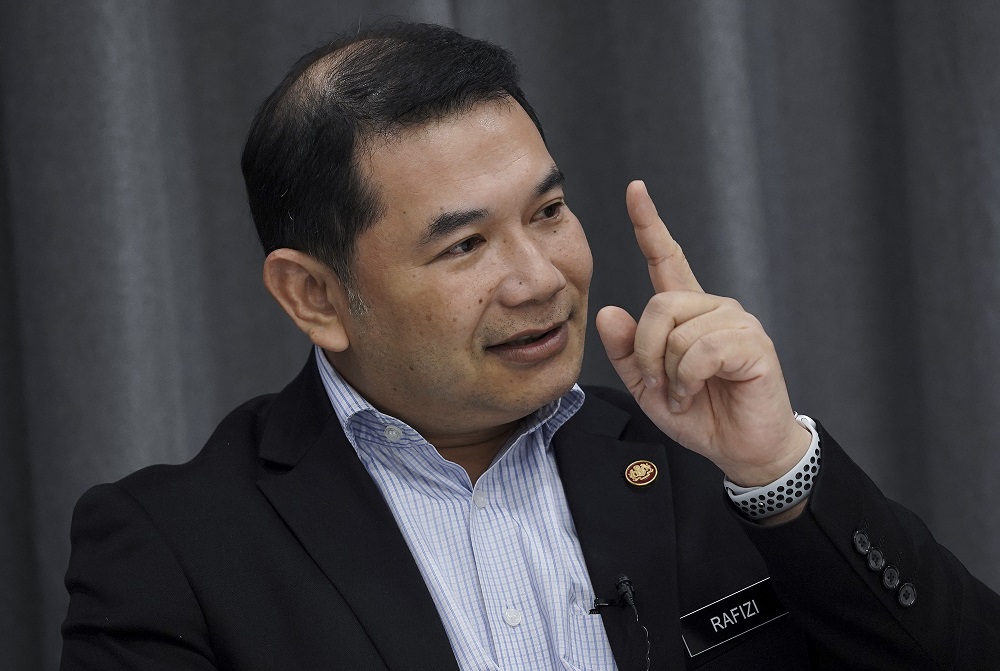
The claim that every misstep in Malaysia’s political journey stems from Anwar Ibrahim “not listening to Rafizi” is a dramatic oversimplification that collapses the complexity of national governance into a cult of personality. It is convenient, emotional, and rhetorically satisfying, but it is not supported by history, chronology, or outcomes.
Political decisions are not prophecies, and Rafizi is not an oracle
Many of the “warnings” attributed to Rafizi were:
- either not documented,
- spoken retrospectively, or
- exaggerated by his supporters after events had unfolded.
Nostalgia is not evidence.
Politics requires institutional judgment, not clairvoyance from one deputy president.
If every decision of a Prime Minister must hinge on one man’s instincts, then what distinguishes a government from a faction?
The Farhash and Yusoff Rawther episodes were complex, not preventable by a letter
To suggest that:
“Had Anwar listened to Rafizi, nothing would have happened”
is to pretend that human behaviour, political actors, and legal processes revolve around a single memo.
The accusation against Anwar was investigated and disproven.
To blame the existence of allegations on ignoring Rafizi is a logical fallacy.
Post GE14 collapse was caused by Mahathir’s manoeuvres, not Anwar ignoring Rafizi
This is the most glaring distortion in the article.
Pakatan Harapan fell not because Anwar did not listen to Rafizi, but because:
- Bersatu defected
- Mahathir resigned
- Muhyiddin and Azmin engineered Sheraton Move
No amount of Rafizi’s “warnings” could have prevented a betrayal executed in hotel rooms.
To rewrite the fall of a government as the result of ignoring one adviser is politically naïve.
The elections in Melaka and Johor were not lost because Anwar ignored Rafizi
Barisan Nasional won those states because:
- turnout among anti-BN voters collapsed
- Covid-era fatigue was high
- PN split the opposition vote
- local machinery in those states was weak long before Rafizi returned
This is a structural political reality, not a personality drama.
The claim that Anwar ignores warnings on individuals is selectively framed
For every name mentioned:
- Shamsul
- Terrirudin
- Azam Baki
- former political secretaries
the article assumes Rafizi’s personal dislike equals national interest.
Governance is not decided by one politician’s sentiment.
The Prime Minister must weigh:
- institutional implications
- constitutional conventions
- royal prerogatives
- parliamentary processes
- diplomatic considerations
A Prime Minister is not a deputy president’s employee.
Education “collapse” narrative is false
Malaysia has challenges, yes.
But the article ignores:
- the 2023 increase in literacy indicators
- improved enrolment among B40 communities
- international praise for early digitalisation reforms
Education cannot be judged by cherry picking surveys or moral panic.
Candidate negotiations in Sabah were not solely Nurul Izzah’s responsibility
Sabah politics operates on:
- local warlords
- coalition arithmetic
- state-federal dynamics
Reducing the result to
“Anwar didn’t listen to Rafizi, that’s why we lost”
is simplistic and self-serving.
Sabah voters have repeatedly shown they reject peninsula-style political narratives.
Rafizi’s electoral record is not as flawless as portrayed
If we apply the same “his advice is always right” standard fairly:
- his approach in Malacca failed
- his industrial policy rollout as minister received mixed results
- his communications strategy often alienated fence-sitters
- his predictions in several states were off-target
But his supporters only remember the hits, not the misses.
Government “attacks” on Rafizi is another myth
There is no evidence of state machinery used to target his family.
Political discourse and criticism do not equal persecution.
Claiming otherwise is an attempt to create a martyr narrative.
A nation cannot be held hostage by one man’s ego
The underlying message of the article is dangerous:
Malaysia succeeds only when Anwar listens to Rafizi
Malaysia fails whenever he disagrees with Rafizi
This is not democracy.
This is not leadership.
This is not reform.
A Prime Minister must listen to:
- data
- institutions
- experts
- civil service
- grassroots
- geopolitical realities
Not just one political personality, no matter how intelligent.
Malaysia’s future is not a one-man echo chamber
Rafizi is a capable strategist, and his contributions are real.
But elevating him into a political prophet whose advice must be obeyed at all times is unhealthy, ahistorical, and intellectually dishonest.
Anwar leads a nation of 33 million people, not the fan club of a single politician.
Good leadership listens to many voices, balances competing advice, and chooses the path that serves Malaysia, not egos.
By: Amri Zakaria
—
This is a reader letter by Amri Zakaria. This writing does not necessarily reflect the position of DeKapital.
A good reply to the nonsense in The Coverage.